The pressure to increase defence production creates an unusual industrial challenge.
Requirements that were previously associated with relatively low-volume, highly specialised programmes are beginning to sit alongside demand for significantly higher output. The products remain regulated and mission-critical, but the manufacturing system is being asked to behave differently.
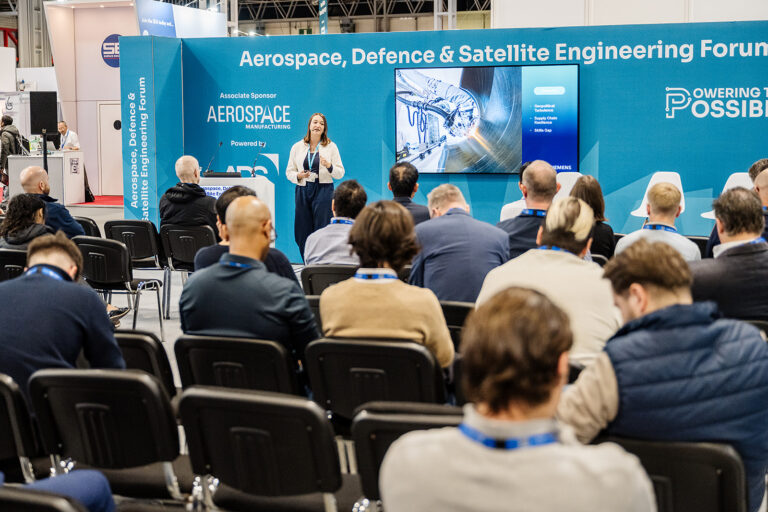
Daniel Parvaz, Membership Manager at Make UK Defence, believes the answer does not have to come entirely from within defence. He points to a sudden need for higher-volume production of smaller components and argues that sectors such as automotive already have transferable experience.
The useful lesson is not that a defence factory should simply copy an automotive line. The sectors have different assurance requirements, product lives, programme structures and procurement environments. What can be transferred are the manufacturing principles developed over years of producing complex products at scale.
That includes understanding takt and flow, designing fixtures around repeatability, minimising setup time, standardising work where appropriate, building quality into the process and using automation where volume justifies it. It also includes supplier development, production planning, and the discipline required to determine whether a constraint is caused by equipment, material availability, inspection, labour, or scheduling.
Automotive manufacturers have also had to become highly capable at managing variation. Modern vehicles are not one identical product repeated endlessly. Options, model variants, powertrains, and customer configurations create complexity that must be managed without disrupting throughput. Defence programmes facing a combination of higher volumes and product variation can learn from the systems used to manage that complexity.
The transfer works in the other direction, too. Defence has deep expertise in assurance, traceability, reliability and long-life support. As other sectors face tighter regulation, cybersecurity requirements, and pressure to retain evidence over longer product lifecycles, some of those disciplines become increasingly relevant outside defence.
There are organisational lessons as well. Higher-rate production depends on engineering, procurement, quality and operations working from the same assumptions about demand and capability. If a supplier is expected to increase output rapidly but receives unstable forecasts, late design changes or approval delays, the manufacturing system cannot compensate indefinitely. Scaling production is therefore as much a customer-supplier challenge as a factory challenge.
This is why cross-sector engineering matters. A production problem should not be treated as unique simply because the end market is different. The most useful question is whether another sector has already faced a similar constraint under different circumstances.
For the UK industry, this is particularly important because many suppliers already operate across multiple markets. An SME serving aerospace, automotive and defence can become a conduit for knowledge between them, provided customers and procurement systems allow that learning to travel.
The acceleration of defence investment will test manufacturing capacity as much as engineering ingenuity. The businesses that respond fastest may be those willing to borrow proven production thinking from sectors that have spent decades learning how to build complex products repeatedly, reliably and at scale.
Advanced Engineering takes place at the NEC Birmingham on 4-5 November 2026.
 Skip to content