
Connecting people, technology and supply chains: Building the UK’s advanced engineering ecosystem
Connecting people, technology and supply chains: Building the UK’s advanced engineering ecosystem
 Skip to content

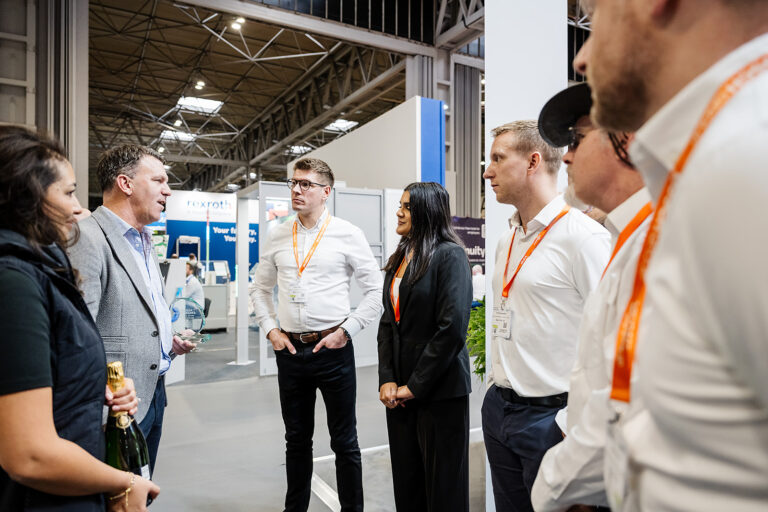
Interview with Simon Farnfield, Head of UK Manufacturing Cluster – Advanced Engineering, Southern Manufacturing & Electronics and UK Metals Expo.
Q1. Advanced Engineering is described as “the place to power the possible” What does that mean in practical terms for someone walking into the event this year?
Simon Farnfield: Everyone knows what the UK needs to do: decarbonise, digitalise, build resilient supply chains, and compete globally. The Industrial Strategy sets that out. The question is: how do you actually do it?
That is what Advanced Engineering is for. When you walk the floor, you are not hearing about clean growth or advanced manufacturing in theory – you are seeing the companies across aerospace, automotive, defence, energy, electronics and space who are already doing it. The composites lightweighting the next generation of aircraft. The automation cutting emissions on the line. The power electronics going into electrified powertrains.
More importantly, you see where you fit. You meet the OEM who needs what you make. The partner who solves the problem you have been stuck on. The investor looking for exactly the technology you have just developed.
It is two focused days where you stop waiting for someone else to make it happen and start building it yourself. That is what powering the possible means: turning strategy into something you can actually do.
Q2. This year, the event is structured around six key tracks – from advanced manufacturing and design engineering to AI, clean energy and people and skills. How did you arrive at these pillars?
Simon Farnfield: We started with where our visitors and exhibitors are really feeling the pressure: productivity and competitiveness, decarbonisation, digital transformation, access to specialist skills and the need for more resilient, UK‑based supply chains. Those themes map directly onto the UK’s industrial priorities.
The six tracks – Advanced Manufacturing and Industrial Machinery; R&D and Design Engineering; AI, Digitalisation and Automation; Clean Energy and Net Zero; People and Skills; and Government, Regional Hubs and Supply Chain – reflect where advanced engineering meets industrial strategy.
For an engineer, it means you can quickly find the technologies and case studies you need – lightweight structures, composites, electrification, robotics, simulation tools, assembly and bonding technologies. For senior leaders, you can walk the show with a board‑level agenda – “how do I decarbonise operations?”, “how do I build a resilient supply chain?” – and see how the different elements join up.
Q3. Advanced Engineering features the UK’s only dedicated Composites Engineering Show. Why is that important?
Simon Farnfield: The Composites Show is absolutely integral to what we do. It is supported by Composites UK and sponsored by PRF Composite Materials, and its job is to promote the strength and diversity of the UK composites supply chain.
Composites sit right at the heart of the big industrial challenges – lightweight structures, performance materials, cleaner aircraft, more efficient vehicles, next‑generation energy systems. For international buyers, the Composites Zone is a shop window on what the UK can do. For UK SMEs in the composites supply chain, it is two days in front of OEMs, tier‑one suppliers and international delegations who are actively looking for partners. That opportunity does not exist anywhere else in the UK right now.
Q4. Advanced Engineering will be co‑located with UK Metals Expo for the first time in 2026. What additional value does that bring to visitors and exhibitors?
Simon Farnfield: This is a step change. By bringing Advanced Engineering and UK Metals Expo together, we are creating the UK’s leading meeting place for design and manufacturing engineers – 700+ exhibitors and more than 15,000 visitors taking over the NEC across metals, composites and advanced engineering materials. There is not currently a show in the UK at this scale.
For visitors, it means you can move seamlessly between materials and the applications, systems and production solutions at Advanced Engineering. If you are an automotive or aerospace engineer wrestling with weight, cost and sustainability, you can explore metals, composites, hybrid structures, joining technologies, forming, machining and automation in one connected experience.
For exhibitors, the co‑location broadens the audience significantly. Metals producers and processors reach new communities from aerospace, automotive, defence, energy, space, electronics and advanced manufacturing. Advanced Engineering exhibitors gain access to metals‑focused engineers, buyers and specifiers. It reinforces one of our core promises: breaking down barriers between disciplines and sectors to create the cross‑pollination you need to move the industry forward.
Q5. You are launching a new Electronics and Semiconductor Forum at Advanced Engineering this year. What prompted this, and how does it connect to your wider UK Manufacturing portfolio?
Simon Farnfield: Electronics and semiconductors are now mission‑critical for every sector. Whether you are designing an advanced powertrain, a high‑reliability aerospace system or an automated production line, your competitive edge comes from what is on the board and in the chip.
It covers advanced electronics, systems and photonics – the technologies that make intelligent, connected and safe systems possible. It is designed for electronic design engineers, hardware engineers, systems architects, power electronics and photonics specialists.
We are working closely with AESIN and Techworks. Together, we are building content that tackles real challenges: supply chain resilience and obsolescence management, which is critical when a manufacturer discontinues specific components, and you need to redesign or find alternatives.
This also builds with Southern Manufacturing & Electronics, which is part of our wider UK Manufacturing portfolio. A lot of exhibitors and visitors in the South are now looking North and to the Midlands through Advanced Engineering, and the Forum strengthens that connection.
Q6. SMEs are often described as the “innovation engine” of UK manufacturing, yet they can struggle to get in front of the right customers and investors. How is Advanced Engineering designed with SMEs in mind?
Simon Farnfield: SMEs are absolutely at the heart of this. Walk the floor and the vast majority of exhibitors are small and mid‑sized businesses with world‑class technologies. Solutions you did not know existed, approaches you had not thought possible, technologies you will not discover unless you are at Advanced Engineering.
We help them in three main ways. First, we attract the customers they want to meet: OEMs, tier‑one suppliers, integrators and buyers from aerospace, automotive, defence, energy, space and electronics. The cross‑sector nature of the show means an SME might come to speak to aerospace primes and end up in serious discussions with energy, automotive or defence manufacturers. That is the power of advanced engineering: technologies that cross boundaries.
Second, we are expanding our Investor Day, which launched in 2025. In 2026 we will curate up to 30 of the UK’s most investable engineering businesses and put them in front of institutional investors, regional development and export agencies, and international trade specialists from Europe, North America and Asia. For a growth‑stage SME, that combination of customer access and investor access over two days is incredibly powerful.
Third, we keep participation accessible – through pavilions, association partnerships and the Enabling Innovation zone – so that an innovative SME can have similar visibility to a much larger brand.
Q7. This year, you have strengthened partnerships with industry organisations. How do these collaborations shape the content and the audience at Advanced Engineering?
Simon Farnfield: Those partnerships are fundamental. Make UK, Make UK Defence, ADS, Composites UK, the Engineering Integrity Society, GTMA, the Surface Engineering Association, ATI, the Silverstone Technology Cluster, AESIN, Techworks, the Railway Industry Association and others are on the front line with manufacturers every day. They know the pressure points, the policy landscape and the practical barriers their members face.
By working closely with them, we ensure the event content reflects real‑world priorities rather than just the latest buzzwords. Their pavilions and programmes create a very rich ecosystem on the show floor.
For smaller companies and association members, this collaboration is a route into markets they might never reach on their own. They can exhibit within a trusted pavilion, benefit from targeted buyer programmes and tap into the combined networks of the event and the association. The level of collaboration we now have between events, associations and their members is, I think, unmatched in the UK.
Q8. From your perspective, leading the UK Manufacturing events portfolio, where do you see the biggest opportunities for UK industry over the next five years, and how is Advanced Engineering evolving to help industry seize them?
Simon Farnfield: I see three big opportunities. First, clean growth: if the UK can lead in low‑carbon aerospace, advanced automotive, energy systems and infrastructure, there is a huge export prize. Second, resilient, high‑value manufacturing closer to home -reshoring and near‑shoring powered by automation, data and advanced materials. Third, making more of the UK’s strengths in R&D, design and systems integration to create high‑margin, technology‑rich products and services.
Advanced Engineering is positioned to support all three. Our tracks and feature areas align with clean energy, modern production technologies and advanced design. Our growing international audience and partnerships with regional hubs and trade bodies help UK companies connect into global opportunities. And by bringing together investors, innovators and industrial end‑users, we hope to accelerate the journey from idea to scalable business.
Q9. If you had one message for UK manufacturers and engineers who have not attended Advanced Engineering before, why should 2026 be the year they make the trip?
Simon Farnfield: If you want to stay competitive over the next decade, you cannot do it in isolation. You need to see what others are doing, challenge your assumptions and build the right partnerships.
Advanced Engineering 2026 gives you two very focused days to do exactly that. You will see how organisations like yours are cutting emissions, building resilient UK‑based supply chains and using digital technologies and new materials to solve real‑world engineering problems. You will meet peers, suppliers, investors and partners you would not otherwise encounter. And you will leave with concrete ideas and contacts that can move your business forward.
For me, that is the value: it is not just an event you attend; it is a catalyst for what you do next.

Connecting people, technology and supply chains: Building the UK’s advanced engineering ecosystem

AI and automation: why testing and inspection matter more than ever
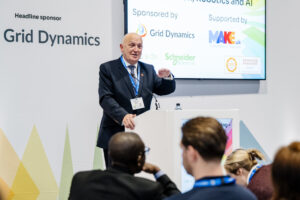
Make UK and Make UK Defence to launch first joint pavilion at Advanced Engineering 2026